
How to Choose Commercial Sun Loungers for Hotels and Resorts
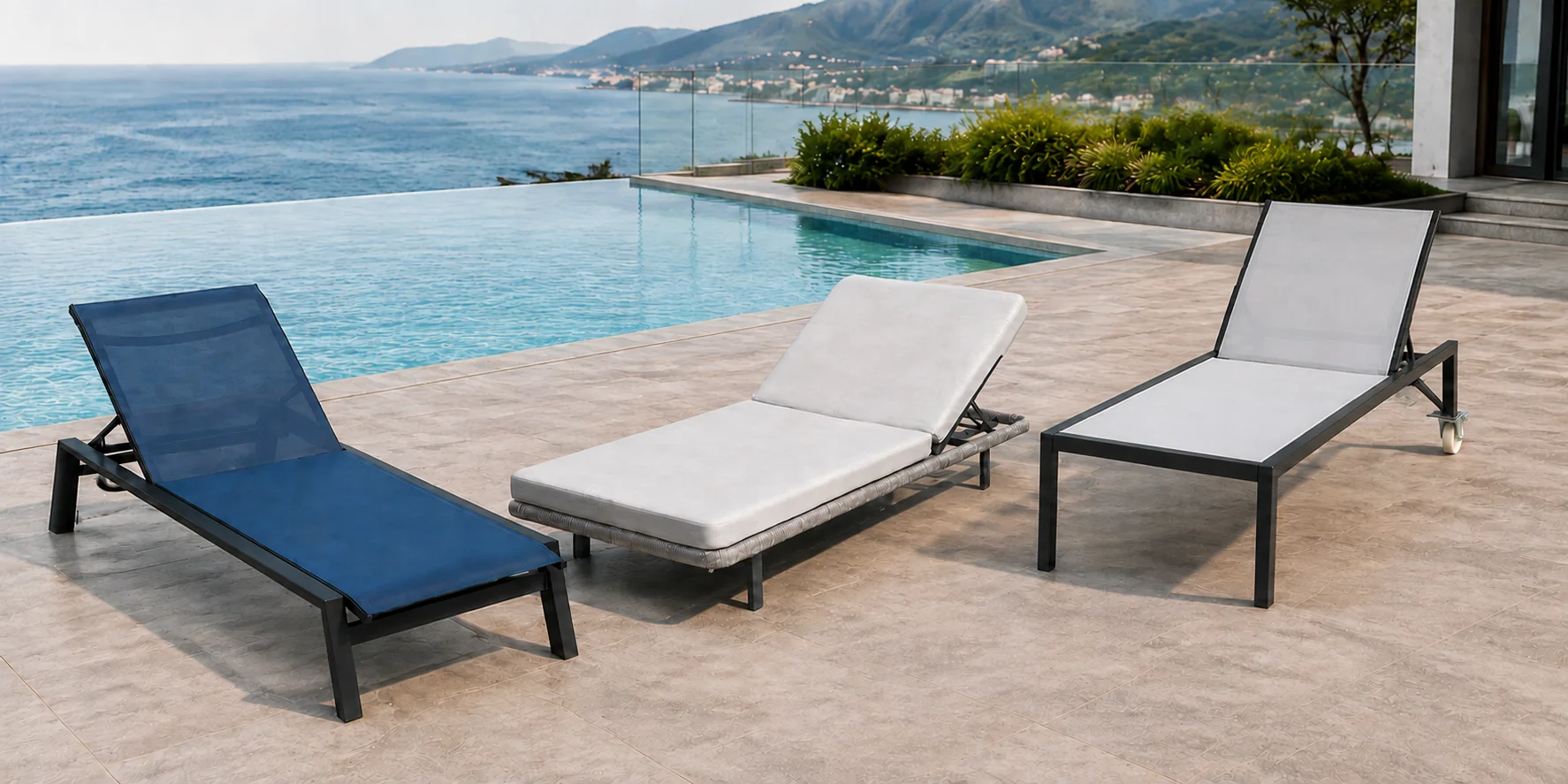
Choosing commercial sun loungers for hotels, resorts, spas and beach clubs is very different from selecting furniture for a private garden.
Commercial poolside furniture must withstand frequent use, strong sunlight, chlorine, salt air and changing weather conditions. It also needs to complement the property’s design, support efficient daily operations and provide a comfortable experience for a wide range of guests.
This practical European buyer’s guide explains what to consider when comparing commercial sun loungers, including materials, maintenance, accessibility, specifications and delivery planning.
What Does Commercial Grade Actually Mean?
Domestic and commercial sun loungers can look very similar in photographs, but their construction, materials and intended use may be very different. For hospitality properties, the following specifications can have a significant effect on appearance, maintenance requirements and service life.
Frame Material
Powder coated aluminium is widely used around commercial pools because it is relatively lightweight, corrosion resistant and easy to maintain.
Teak and other suitable timbers can provide a warmer, more luxurious appearance, particularly in spas, beach clubs and premium resorts. However, buyers should consider the maintenance required to preserve the timber’s original colour and finish.
The best material will depend on the property’s location, design, maintenance resources and intended use.
Lounger Surface
Sling mesh, including materials such as Textilene, dries quickly and is particularly practical for busy pool areas. It can be cleaned easily and does not normally require cushions to be removed or stored each day.
Cushioned loungers can create a softer and more luxurious guest experience. When considering cushioned models, buyers should examine the fabric specification, water resistance, cleaning requirements, storage arrangements and availability of replacement covers.
Neither option is automatically better. The right choice depends on the experience the property wants to create and how the furniture will be managed.
Maximum User Weight
Check the manufacturer’s stated maximum user weight for every model.
Do not assume that a wider lounger automatically provides a higher weight capacity. Frame construction, joints and supporting components all contribute to the product’s stated capacity.
Providing a selection of generously proportioned loungers can also help a property accommodate a broader range of guests comfortably.
Wheels and Repositioning
Wheels can make loungers easier for hotel teams to reposition, clean around and store. This becomes increasingly important when staff are managing a large pool deck.
Buyers should check the type and position of the wheels, whether any locking mechanism is provided and how easily the lounger can be moved across the property’s actual poolside surface.
Replacement Parts and Maintenance
Before ordering, ask whether replacement components are available.
Sling surfaces, wheels, feet, cushions and other heavily used components may eventually need attention even when the main frame remains in good condition. Access to suitable replacement parts can extend the useful life of the furniture and reduce the need to replace complete units.
Lead Times and Delivery
Lead times vary according to product availability, order quantity, finish, production requirements, shipping method and destination.
Confirm the estimated production and delivery schedule in writing before committing to a refurbishment deadline, seasonal opening or hotel launch. Properties ordering customised furniture or larger quantities should allow additional time for production and logistics.
Where Does Accessibility Fit Into the Decision?
A beautifully designed pool area can still exclude guests if every sun lounger is extremely low.
Older guests, people with reduced mobility and guests living with hip, knee or joint conditions may find it difficult to lower themselves onto a standard low profile lounger or stand up from it without assistance.
Accessibility should therefore be considered alongside appearance, durability and price when outdoor furniture is being selected.
European accessibility standards and legislation do not create one universal certification for accessible sun loungers.
EN 17210:2021 concerns the accessibility and usability of the wider built environment. It is not a furniture specific product standard.
The EN 581 series covers the safety, strength and durability of commercial outdoor seating. Requirements may also differ between countries and property types.
Rather than relying on broad claims that a product is fully accessible or compliant everywhere, buyers should examine its actual design and specifications.
Important considerations include:
- Seat height
- Usable width
- Maximum user weight
- Frame stability
- Ease of sitting down and standing up
- Position and operation of wheels
- Space around the lounger
- Proximity to accessible routes and pool facilities
No single design will meet every individual need, but offering more than one lounger height and style can make a poolside area usable and comfortable for a broader range of guests.
Introducing Accessible Loungers Without Replacing Everything
Hotels do not necessarily need to replace their entire poolside collection to improve comfort and accessibility.
A limited number of elevated loungers can be introduced alongside the existing furniture. Selecting a complementary frame colour, material and overall style helps the new loungers integrate naturally into the poolside environment.
The Unity Access lounger has a seat height of approximately 550mm, compared with the considerably lower profile of many standard commercial loungers. This increased height can make sitting down and standing up easier for guests who experience difficulty using low furniture.
For properties that prefer a different appearance, aluminium framed loungers within the Access Sun Loungers collection can also be manufactured with an elevated seat height comparable to the Unity Access model. This gives hotels greater flexibility to coordinate elevated seating with their chosen poolside design.
Custom manufacturing requirements, minimum quantities, pricing and lead times may vary by model and should be confirmed during the quotation process.
An elevated seat does not automatically make every lounger suitable for every guest. Buyers should also consider usable width, maximum user weight, frame stability, space around the lounger and the individual needs of their guests.
The Unity Access model combines its elevated seat height with generous proportions, an optional integrated canopy, an adjustable backrest and locking rear wheels.
Elevated and accessible furniture should not look clinical or appear separated from the main guest area. It should form part of the overall poolside design and allow guests to relax alongside their family and friends.
A Buying Checklist for Hotel Procurement Teams
Having the following information ready before requesting prices can make the sourcing process faster and help suppliers recommend suitable options.
What Is Your Guest Profile?
Consider whether the property is primarily a family resort, an adults only hotel, a spa led retreat, a beach club or a mixed destination.
Also consider the number of older guests, guests with reduced mobility and guests who may benefit from higher or more generously proportioned seating.
How Many Loungers Do You Need?
Identify the approximate total quantity required and whether the order will replace an existing collection, furnish a new development or add selected products to the current poolside area.
Which Areas Are Being Furnished?
Pool, spa, beach, terrace and private balcony areas may each require different materials, dimensions and styles.
Creating separate requirements for each area can make product selection and pricing much clearer.
What Are Your Required Dimensions?
Check the available space and consider lounger length, width, seat height and the clearance needed between products.
The number of loungers that physically fits around a pool should not be the only consideration. Guests and staff must also be able to move safely and comfortably through the area.
What Is Your Existing Design Scheme?
Provide photographs or details of the property’s colour palette, flooring, parasols and existing outdoor furniture.
This allows new pieces to complement the wider design rather than appearing to have been added as an afterthought.
What Level of Maintenance Is Practical?
Consider whether cushions can be removed and stored, how frequently furniture will be cleaned and whether the property is exposed to salt air, intense sunlight or heavy seasonal use.
A product that looks impressive in a catalogue must also work with the property’s daily operating routine.
What Is Your Delivery Schedule?
Provide the date by which the furniture is required and allow time for product selection, quotations, confirmation, production and shipping.
Ordering well before the start of the season provides more flexibility, particularly for larger or customised orders.
Where Will the Order Be Delivered?
Delivery costs and logistics vary considerably by country, property location, order volume and accessibility for unloading.
Providing the complete delivery location allows the supplier to assess the available shipping options more accurately.
Can Different Styles and Seat Heights Be Combined?
A property may want practical sling loungers around the main pool, cushioned loungers for a spa terrace and elevated models for guests who find low seating difficult.
Ask whether styles, colours and finishes can be coordinated across the order and whether selected models can be manufactured at an elevated seat height.
What Is the Minimum Order Quantity?
Minimum quantities can vary by product and destination. Confirm this early, particularly if the property is considering a smaller initial order or combining several furniture styles.
Choosing the Right Supplier
A commercial outdoor furniture supplier should be able to provide clear information about:
- Product dimensions
- Frame and surface materials
- Maximum user weight
- Colour and finish options
- Minimum order quantities
- Production and delivery estimates
- Shipping arrangements
- Maintenance requirements
- Replacement components
- Commercial pricing
Be cautious of vague descriptions such as “heavy duty,” “fully accessible” or “suitable for all users” when they are not supported by meaningful specifications.
The strongest purchasing decision will come from comparing the actual design, materials and dimensions of each product against the property’s environment, operating requirements and guest profile.
Commercial and Accessible Sun Loungers for European Hospitality
Access Sun Loungers offers premium standard and accessible sun loungers for hotels, resorts, spas and beach clubs.
The collection includes practical sling loungers, cushioned luxury designs, timber effect styles, generously proportioned models and the Unity Access elevated sun lounger.
Whether you are planning a new development, replacing an existing collection or considering elevated loungers alongside your current furniture, we can discuss suitable products, quantities, delivery requirements and trade pricing for your property.
Request Trade Pricing to receive product images, dimensions, material options and delivery guidance for your project
By Jackie Meechan, Access Sun Loungers | Updated August 2026