
Hotel Pool Accessibility: A Practical Guide for Hotels and Resorts
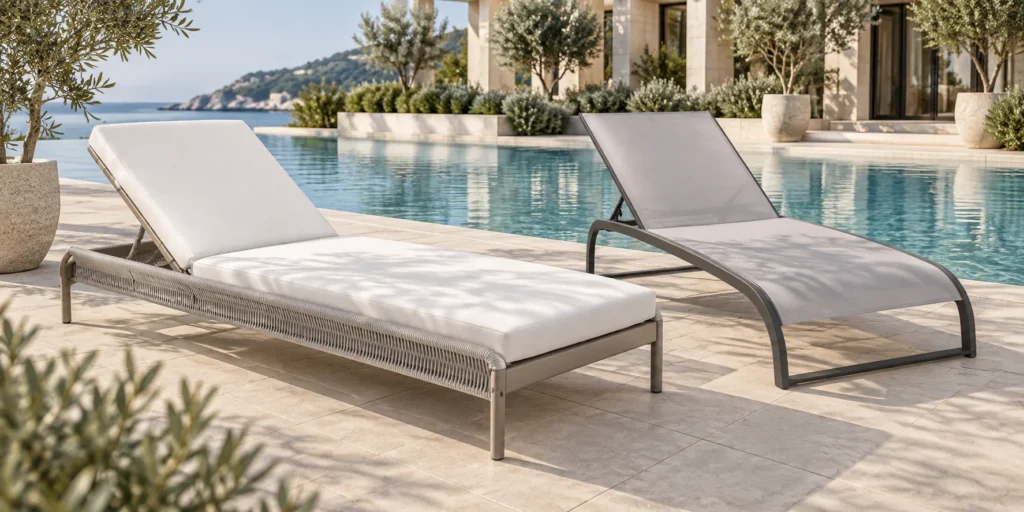
For many guests, the pool is the best part of the stay. It’s where they relax, spend time with family and actually enjoy the destination. But a pool area can look accessible and still shut some guests out. A ramp gets you to the water – It doesn’t get you a seat.
Hotel pool accessibility doesn’t start and end at the water’s edge. Guests need to reach the pool safely, move between furniture, find somewhere to sit or lie down, get to shade, or ask for help without it becoming a whole production.
Improving accessibility isn’t about turning a stylish terrace into a clinical one. It’s about looking at the whole guest journey and offering real choices that fit naturally into the space you already have.
This guide is for owners, operators, designers and procurement teams who want to build a more inclusive poolside, without losing the look and feel that makes the hotel worth staying in.
What does hotel pool accessibility actually mean?
An accessible pool area lets guests with different mobility needs reach, use, and enjoy it with dignity. That’s wheelchair users and people with walking aids, but it’s a much bigger group than that. Older travellers. Guests recovering from surgery. Anyone with a joint condition. Anyone who finds a low lounger hard to get in and out of.
Why Access to the Water is Only Half the Job
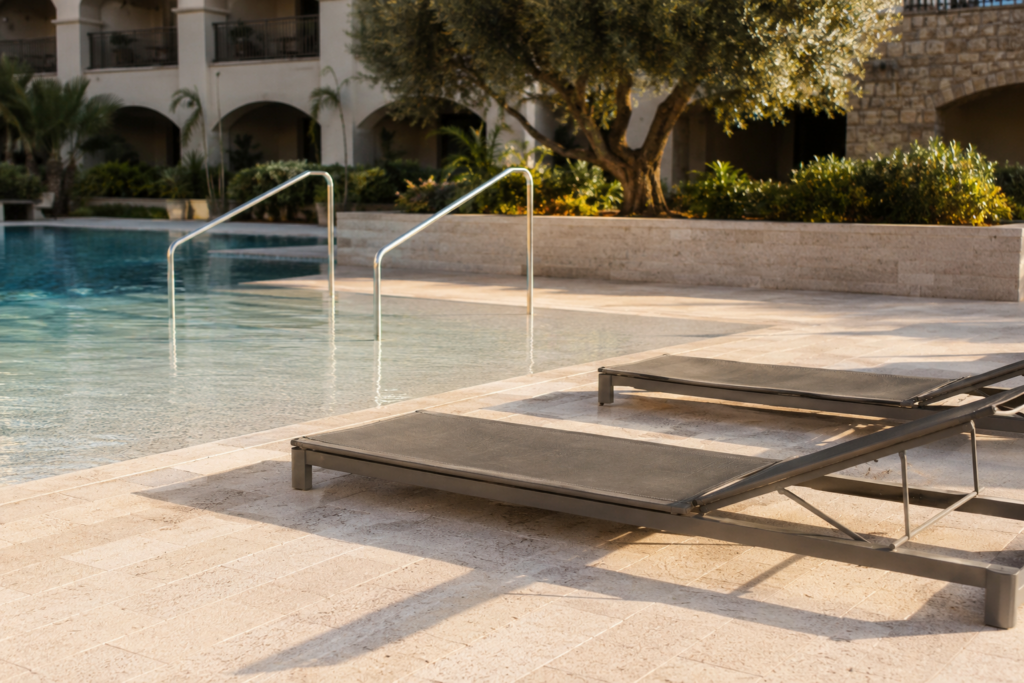
Most hotels plan accessibility around how a guest gets into the pool. That matters, but it’s only one moment in a much longer journey.
Can the guest reach the pool without steps? Is there room to move between loungers? Can they sit down and stand back up without help? Is there a spot next to their family, not off in a corner? Can they get to shade?
A pool lift doesn’t fix a lounger that’s too low to use. A step-free route doesn’t help if a stack of towels blocks it. An accessible changing room means nothing if nobody knew it existed before they booked.
Treat the whole journey as one system. That’s what the strongest accessibility plans actually do.
Common Barriers Around Hotel Pools
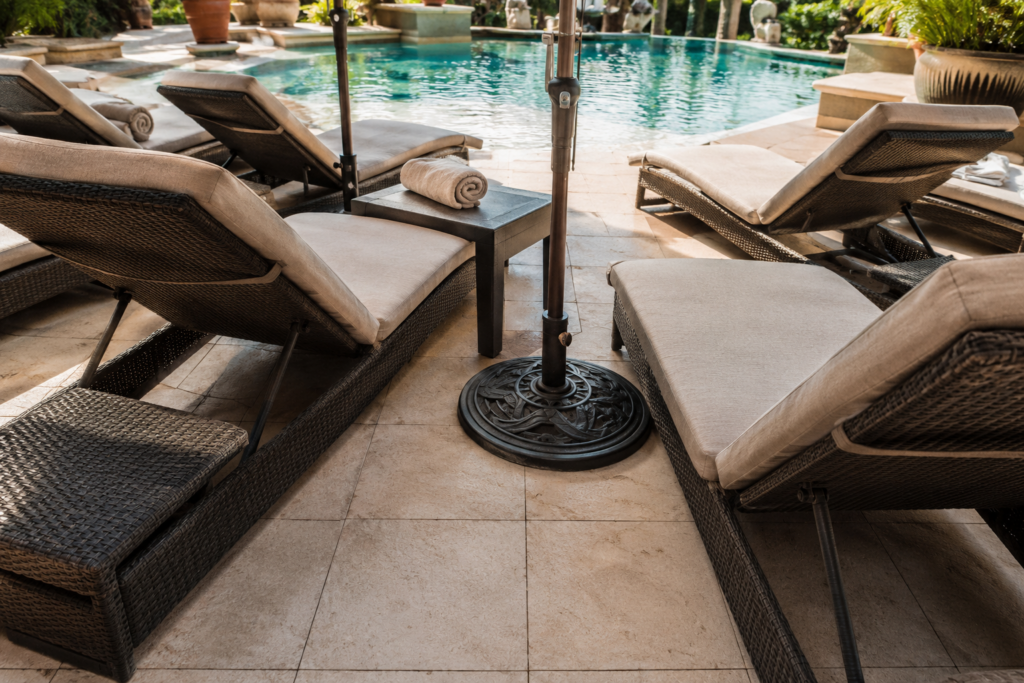
Most of these aren’t obvious unless you’ve watched someone struggle with them. That’s exactly why they survive refurbishments unnoticed.
1. Sun loungers set very close to the ground.
2. Narrow gaps between rows of furniture.
3. Towels, bags and side tables gradually closing off the path.
4. Loungers too heavy for a guest to move themselves.
5. No stable seating with armrests nearby.
6. Accessible furniture stuck away from the rest of the group.
7. Steps with no clearly marked alternative.
8. Slippery or uneven surfaces.
9. Not enough shaded seating.
10. Access equipment that exists, but nobody told the guest about it.
None of these is dramatic. They just quietly cost a guest their independence, and they land back on your staff as a favour someone has to sort out on the spot, instead of a chair that worked in the first place.
Build Clear Routes and Sensible Spacing
Start here. It’s the easiest fix, and it costs the least.
A path that’s clear at 9 am but boxed in by loungers, towels and tables by noon isn’t a clear path. Check the route from the entrance to the seating, the pool edge, the changing rooms, the toilets, the bar and the exits. Leave turning space wherever a wheelchair user needs to change direction or pull up beside a lounger.
Don’t tuck accessible seating into a spare corner nobody wants. Guests should be able to sit with their family and choose sun or shade like everyone else.
A qualified access professional can advise on exact dimensions and local requirements for your property. Your team’s job day to day is simpler: keep the routes you’ve already built actually clear.
Why Seat Height Matters
Standard loungers sit low. That’s fine for most guests and genuinely difficult for others.
Getting up from a low seat takes strength, balance and good hips and knees. For an older guest or someone recovering from an injury, that is not a small ask. It can be the difference between using the pool area and avoiding it entirely.
It matters for wheelchair transfers too. The bigger the drop between the wheelchair seat and the lounger, the harder the transfer. A higher seat closes that gap, though the right height still depends on the individual guest.
This doesn’t mean every lounger needs raising. It means guests should have a real choice, instead of one height that quietly rules some of them out.
Choose accessible loungers without losing the setting
The best accessible furniture doesn’t look like accessible furniture. Guests should be able to tell it helps without feeling like they’ve been handed hospital equipment.
The Unity Access elevated sun lounger was designed for exactly this. Its 55 cm seat height is designed to support easier sitting and standing and can reduce the height difference for some wheelchair transfers. It has a four-position backrest, locking rear wheels and a removable canopy while retaining the appearance of premium outdoor furniture.
A smaller property might start with a few elevated loungers. A larger resort may need several, spread across pools. The right number comes down to your size, your guest profile and how the space is used.
Position these loungers where guests actually sit, with room for a companion lounger beside them. Not in storage. Not on request only.
Look Beyond Height When You’re Choosing Furniture
Height gets the attention, but it’s not the whole picture.
Arm support: Some guests rely on armrests to control sitting and standing. If a lounger doesn’t have them, put supportive upright seating nearby instead.
Stability: Furniture needs to feel solid when someone sits, stands or shifts position. Lock the wheels. Make sure staff know how.
Width and weight capacity: A wider lounger isn’t automatically a stronger one. Check the manufacturer’s stated maximum weight and whether it’s actually rated for commercial, daily use.
Backrest adjustment: An adjustable backrest gives guests more control, and makes the move from lying to sitting much easier.
Shade: Accessible seating needs to exist in the shade too. Nobody should have to choose between a chair that works and a bit of sun protection.
Materials: Poolside furniture takes a beating: sun, chlorine, salt, constant cleaning. Frames that resist corrosion and breathable fabrics can reduce maintenance and replacement costs over the life of the furniture.
For the fuller breakdown on frames, fabrics and commercial specs, see our guide to choosing commercial sun loungers for hotels and resorts.
Include Beach and Water Access Where it's Relevant
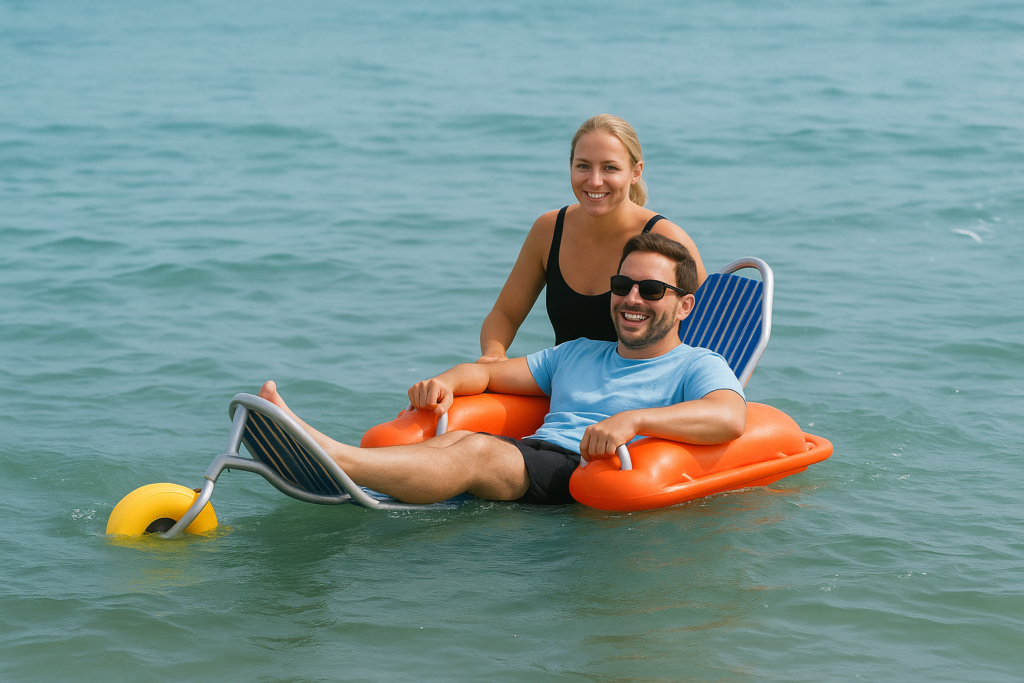
For coastal properties, the journey doesn’t stop at the pool terrace.
Soft sand and the waterline are their own barrier for a standard wheelchair. Beach wheelchairs use larger wheels built for sand. Floating wheelchairs let guests get into calm water with the right supervision.
What you need depends on your terrain, your water conditions and how your team operates. Think through where the equipment lives, who checks it, how guests request it and what help they’ll need to use it safely.
See our range of beach and floating wheelchairs for hotels and resorts.
Make Your Accessibility Information Easy to Find
None of this helps a guest who doesn’t know it exists before they book.
Skip vague lines like “accessible facilities available.” Say what you actually have, and invite guests to get in touch about their specific needs. Cover:
- Whether the route to the pool is step-free
- What kind of pool entry you offer
- Whether elevated loungers or supportive seating are available
- Where the accessible changing rooms and toilets are
- Whether you have a beach or floating wheelchair
- Whether any of it needs reserving in advance
- Who to contact before arrival
Real photos help more than any paragraph of text. They let a guest judge the space for themselves before they’ve committed to travelling.
Give Your Staff the Confidence to Help
Good design only goes so far without a team that understands it.
Pool, reception, housekeeping and guest relations staff should know what’s available and how it works, and just as importantly, know to ask before jumping in to help physically.
This doesn’t need a long training programme. Cover respectful communication, how the equipment works, a quick daily check of it, and how to respond when a guest raises a concern. The aim isn’t guessing what a guest can or can’t do. It’s giving them a real choice and backing it up with confidence.
A Practical Hotel Pool Accessibility Checklist
Use this during a refurbishment, an operational review, or when you’re sourcing new furniture.
Arrival and Routes
- Is there a step-free route from the hotel to the pool?
- Are the paths wide enough, and kept clear all day?
- Is there enough turning space near key furniture and facilities?
- Are the surfaces stable and well maintained?
Furniture and Layout
- Is there more than one lounger height on offer?
- Is supportive seating with armrests available?
- Is there room beside accessible loungers for a wheelchair and a companion?
- Is accessible seating placed in the good spots, not a spare corner?
- Is shaded seating available?
- Have you checked the maximum user weight and commercial rating?
Pool and Beach Access
- Is there a proper way in and out of the water?
- Is the access equipment inspected and maintained?
- If you’re coastal, do you have a solution for sand or water access?
- Are your safe operating procedures written down?
Communication and Service
- Is detailed accessibility information available before booking?
- Do your photos actually show the route and the facilities?
- Do staff know what you have and how to help?
- Is there a simple way to log and act on guest feedback?